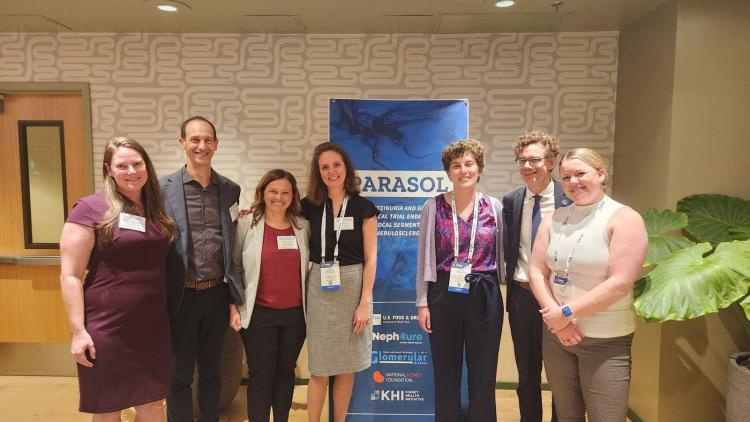
📷 Photo credit: The International Society of Glomerular Disease | is-gd.org
The approval of sparsentan by the U.S. Food and Drug Administration (FDA) marks a historic milestone for people living with focal segmental glomerulosclerosis (FSGS), providing the first ever specifically approved treatment for this rare kidney disease. This breakthrough reflects decades of global research and collaboration across the nephrology community. A key part of the evidence underpinning this decision came from the PARASOL initiative – an international project designed to validate biomarkers, such as proteinuria, as reliable predictors of long-term kidney outcomes in FSGS.
The National Registry of Rare Kidney Disease (RaDaR) played a key role in this work as the external validation cohort, providing independent replication of findings from a pooled international dataset. By providing high-quality longitudinal patient data, RaDaR helped enable the large-scale analyses needed to demonstrate that early changes in proteinuria are strongly associated with long-term kidney health. This independent replication strengthened the evidence base supporting proteinuria as a surrogate for long-term kidney outcomes, helping to underpin regulatory acceptance of proteinuria reduction as a basis for approval in FSGS.
FSGS is a rare and complex condition, making traditional large-scale clinical trials challenging. Initiatives like PARASOL address this by combining data from multiple sources worldwide, highlighting the critical role of registries like RaDaR in accelerating research and supporting regulatory decision-making.
This approval demonstrates how collaborative, data-driven approaches can help bring treatments to patients faster, particularly in rare diseases.
“The PARASOL initiative is an example of how clinical data from patients with a rare disease, collected across international borders, can be used to change the treatment landscape. The PARASOL results allowed regulators to estimate, based on short-term reductions in proteinuria in a clinical trial, how likely sparsentan is to provide long-term protection of kidney function in people with FSGS." - Professor Danny Gale, Director of RaDaR
Further reading
PARASOL findings, including the contribution of RaDaR, were presented at ASN Kidney Week 2024. View slides