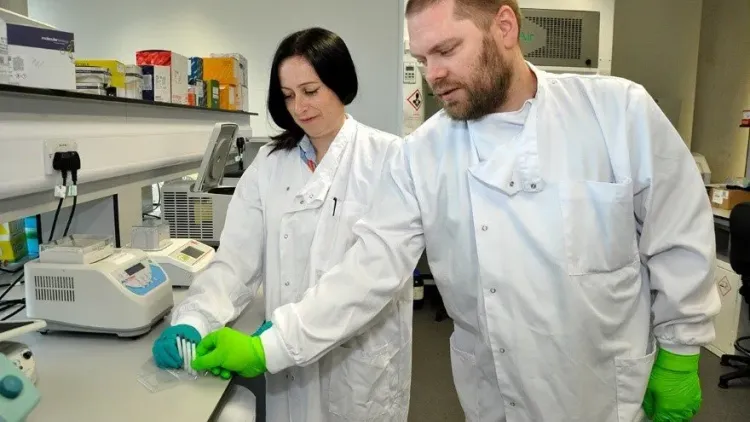
The LifeArc–Kidney Research UK Centre for Rare Kidney Diseases is now moving into a major delivery phase, with eight of 17 funded roles in place across paediatric kidney centres. The LifeArc-Kidney Research UK Centre is part of LifeArc’s Translational Centres for Rare Disease programme and brings together partners across the UK to improve research, care and access to new treatments for children with rare kidney diseases.
A major focus of this work is strengthening identification, recruitment and data quality within the National Registry of Rare Kidney Diseases (RaDaR) - the UK’s registry for rare kidney conditions and the largest rare kidney disease registry in the world.
RaDaR brings together data from patients with defined rare kidney diseases to support research, improve understanding of conditions and enable clinical trials. Through the LifeArc programme, work across paediatric kidney centres will focus on:
- identifying children with rare kidney conditions who meet criteria for existing RaDaR disease groups but are not yet enrolled
- enriching data for children already in the Registry
- increasing recruitment across paediatric kidney centres
A key development is the introduction of a new rare disease group for unexplained CKD in children, approved by the UK Kidney Association’s Rare Disease Committee. While not capturing every case, this will significantly broaden inclusion, meaning most children seen in secondary care kidney services can now be considered for RaDaR.
This approach aims to create a more inclusive, consented cohort of children who can be followed over time through RaDaR and, where appropriate, offered opportunities to take part in research and clinical trials.
Alongside this work, the programme is:
- supporting key trials including EMPA-KIDNEY and LIMITS
- exploring barriers to families accessing Patient Knows Best
- strengthening transition pathways into adult services, where loss to follow-up remains a challenge
Work is also underway to ensure children are appropriately linked to participating centres, with around 500 currently identified as not yet affiliated to a BAPN site and therefore not captured within RaDaR.
Together, this work will strengthen the UK’s ability to identify and follow children with rare kidney disease through RaDaR - improving data quality, supporting research and expanding access to clinical trials.
The Centre ultimately aims to connect the UK’s 13 childhood kidney care centres more closely with RaDaR and other national infrastructure, helping to align care, bridge datasets, support clinical trials and accelerate the development of new treatments for rare kidney diseases.
Read more about the LifeArc-Kidney Research UK Centre for Rare Kidney Diseases