

Named Lectures

Our Named Lectures are among the Association’s highest honours, recognising people who have made an outstanding contribution to kidney care, research, science, policy or patient involvement.

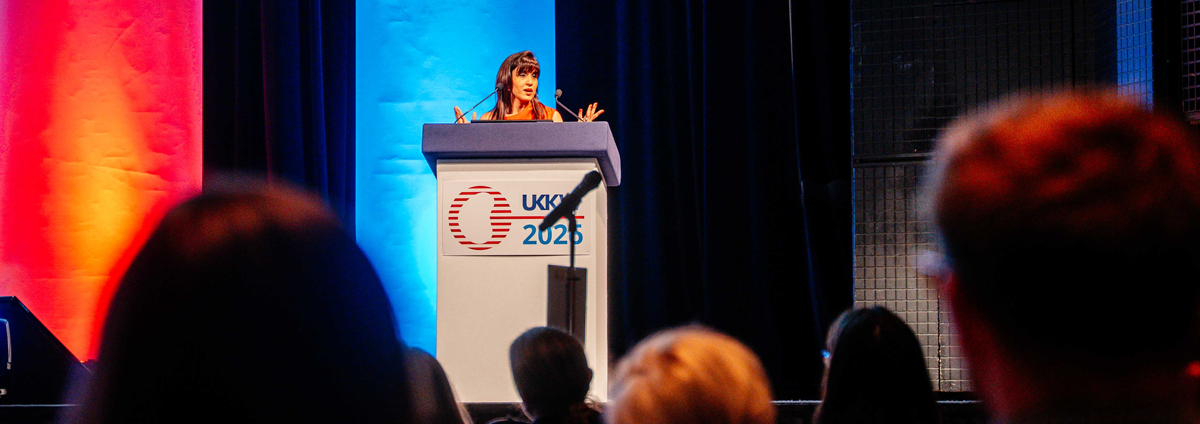
Presented at UK Kidney Week, each lecture has its own history and focus. Explore the lectures below, find out who is eligible and view previous recipients.

Nominating a speaker

By submitting a nomination, UKKA members can bring important work to a wider audience, recognise an exceptional speaker and help shape an engaging and representative UK Kidney Week programme.

To submit a nomination, email ukka@ukkidney.org.

Nominations are open now and close on 4 January 2027.

Submit a nomination of up to 100 words explaining:

  • Who you are nominating and their proposed subject
  • Their expertise and contribution to the field
  • Why they would be an authoritative and engaging speaker

Please consider the purpose and eligibility criteria of the relevant lecture before submitting your nomination.

Nominations are reviewed by an appointments panel and considered against the criteria for each lecture. The panel also considers the overall balance of the UK Kidney Week programme, including:

  • The range of subjects represented across successive years
  • The balance of UK and international speakers
  • Diversity, in line with the UKKA Diversity Policy

The panel’s recommendations are ratified by the UKKA Trustee Board. Nominees who are not selected may be nominated again in a future year.

Chandos Lecture

The Chandos Lecture recognises an outstanding contribution to the understanding or care of kidney disease. Nominations may cover any subject relating to kidney disease and are welcomed for nephrologists, kidney scientists and MPT members from the UK and internationally.

Established in 1976 with the support of the National Kidney Research Fund, now Kidney Research UK, the lecture reflects the Chandos family’s longstanding support for the kidney community.

  • 1976 – Larry Earley (USA) – The development of the concept of control of sodium reabsorption by physical factors
  • 1978 – Charles Cochrane (USA) – Mediation of glomerular injury
  • 1980 – Barry Brenner (USA) – The physiological basis of glomerular filtration
  • 1982 – Michael Mauer (USA) – The glomerular mesangium in diabetic nephropathy
  • 1986 – Saulo Klahr (USA) – The effects of urinary obstruction
  • 1988 – Ramzi Cotran (USA) – Endothelial activation in vascular injury
  • 1991 – Herman Waldmann (UK) – Prospects for transplantation tolerance
  • 1992-5 – No lecturers appointed
  • 1996 – Marc de Broe (Belgium) – Recovery from injury to the kidney
  • 1998 – Stuart Shankland (USA) – The role of cell cycle proteins in glomerular disease
  • 2000 – Mark Pepys (UK) – Prognostic and pathogenetic significance of C-reactive protein
  • 2002 – Peter Ratcliffe (UK) – Oxygen sensing
  • 2004 – Ram Gokal (UK) – Peritoneal dialysis
  • 2006 – No lecturers appointed
  • 2007 – Steve Harper (UK) – How the glomerulus works in health and disease – or so you thought
  • 2008 – No lecturers appointed
  • 2009 – Dontscho Kerjaschki (Austria) – Podoplanin – from podocytes and beyond
  • 2010 – Rob Horne (UK) – Supporting behaviour changes in patients with chronic kidney disease
  • 2011 – Fred Finkelstein (USA) – Quality of life on dialysis: The Patients’ Perspective
  • 2012 – Gerry Appel (USA) – What have we learned about the treatment of Lupus Nephritis
  • 2013 – No lecturers appointed
  • 2014 – No lectures appointed
  • 2015 – Ken Farrington (UK) – End-of-life and palliative care in the dialysis setting
  • 2016 – Liz Lightstone (UK) – Pregnancy and Kidney Disease: the 3Ps
  • 2017 – Simon Davies (UK) – Can we control volume sufficiently in anuric patients?
  • 2018 – Menna Clatworthy (UK) – Life in the marshes – kidney environment shapes immune cell function
  • 2019 – Albert Ong (UK) – Reimagining clinical care in ADPKD for the 21st century?
  • 2020 – No lecturer appointed
  • 2021 – Megan Griffith (UK) – Update in membranous glomerulonephritis
  • 2022 – No lecturer appointed
  • 2023 – No lecturer appointed
  • 2024 – John Sayer (UK) – Unveiling urinary phenotypes: strategies for kidney disease diagnosis and treatment
  • 2025 – No lecturer appointed
  • 2026 – David Kavanagh

De Wardener Lecture

The De Wardener Lecture recognises an individual with a distinguished record in clinical research relating to kidney disease.

Established in 2004, it honours Professor Hugh de Wardener, one of the UK’s most influential nephrologists and clinical scientists. Professor de Wardener served as President of both the Renal Association and the International Society of Nephrology and delivered the inaugural lecture himself.

  • 2004 – Hugh de Wardener (UK) – Plasma sodium and hypertension
  • 2005 – Graham MacGregor (UK) – Salt – Neptune’s gift?
  • 2006 – Bryan Williams (UK) – The hypertensive heart
  • 2007 – Pierre Ronco (France) – New insights into the pathophysiology of membranous nephropathy: a bench-to-bedside story
  • 2008 – Richard J Johnson (USA) – Uric acid, the metabolic syndrome and kidney disease
  • 2009 – Tim Goodship (UK) – Haemolytic Uraemic Syndrome
  • 2010 – Barry Freedman (USA) – New genetic insights in end-stage renal disease
  • 2011 – Hans Oberleithner (Germany) – Sodium: Wolf in Sheep’s Clothing
  • 2012 – Peter Mathieson (UK) – Towards rational therapy for proteinuria
  • 2013 – Terry Cook (UK) – Conventional and molecular microscopy in renal transplant pathology
  • 2014 – Neil Turner (UK) – Alports and the structure of the glomerulus
  • 2015 – David Jayne (UK) – B-cell targeting in ANCA-associated vasculitis
  • 2016 – Adrian Woolf (UK) – Kidney and urinary tract malformations: from the clinic to understanding molecular mechanisms and envisioning novel therapies
  • 2017 – David Wheeler (UK) – Sweetening the urine: A new approach to the management of chronic kidney disease
  • 2018 – Moin A Saleem (UK) – Stratified medicine in Nephrology
  • 2019 – Edwina Brown (UK) – Individualising the peritoneal dialysis prescription
  • 2020 – No lecturer appointed
  • 2021 – Rachel Lennon (UK) – Investigating basement membrane biology to improve treatments for Alport syndrome
  • 2022 – No lecturer appointed
  • 2023 – Laurie Tomlinson (UK) – Filling in the gaps & beyond
  • 2024 – No lecturer appointed
  • 2025 – No lecturer appointed
  • 2026 – Michelle Willicombe (UK)

Donna Lamping MDT Researcher Award

The Donna Lamping Award Lecture celebrates outstanding multiprofessional research that has contributed to better kidney care. Nominations are open to UKKA members who have made an exceptional contribution to research in this field.

Professor Donna Lamping was internationally recognised for her work on patient-reported outcomes and the effects of long-term conditions on people’s lives. After moving from Canada to the UK in 1992, she introduced important new approaches to measuring health and the impact of illness, initially focusing on people with CKD.

  • 2012 – Joseph Chilcott – Understanding depression and illness perceptions in ESRD: Time for intervention
  • 2013 – Paula Ormandy – Patient information need, the foundation for information provision, education and decision making
  • 2014 – Maria Da Silva Gane – End of Life Care
  • 2015 – Chris Jones – Renal Replacement Therapy in the increasingly elderly
  • 2016 – Elizabeth Lindley – The cost of neglecting residential renal function in haemodialysis patients
  • 2017 – Sharlene Greenwood – Renal exercise research: Are we there yet?
  • 2018 – Nicola Thomas – The how and the why of patient and public involvement in research
  • 2019 – Enric Vilar – Individualising Haemodialysis
  • 2020 – No lecturer appointed
  • 2021 – Lina Johansson – My clinical academic journey: 6 lessons learnt during my research career
  • 2022 – No lecturer appointed
  • 2023 – Helen Noble – Renal Arts Group – Improving quality of life through art
  • 2024 – Sharon Huish – Overcoming the PhD stereotype; Empowering multidisciplinary teams for research success
  • 2025 – Hannah Young – Focusing on what matters, rehabilitation, physical activity and research in multiple long term conditions
  • 2026 – Shivani Sharma

O’Donoghue Lecture

The O’Donoghue Lecture recognises an outstanding contribution to kidney healthcare policy, education and training, service development or workforce planning. Nominations are welcomed for nephrologists, kidney scientists and MPT members from the UK and internationally.

The lecture honours Professor Donal O’Donoghue OBE, a clinical nephrologist, national leader and passionate advocate for people with kidney disease. As the first National Clinical Director for Kidney Care in England and a former President of both the British Renal Society and Renal Association, he helped transform kidney services and championed patient and multiprofessional involvement. His leadership also helped lay the foundations for the creation of the UK Kidney Association.

  • 2021 – Chris Whitty – The role of the medical profession in tackling UK health disparities
  • 2022 – June Raine
  • 2023 – Phil Kalra – Building careers together through academic advancement
  • 2024 – Sharlene Greenwood – It takes a village
  • 2025 – David Wheeler – Implementing evidence to drive improvement in kidney care
  • 2026 – Smeeta Sinha

Osman Lecture

The Osman Lecture is one of the Association’s longest-established honours. It recognises an outstanding speaker and may address any subject relating to kidney disease. Nominations are welcomed for nephrologists, kidney scientists and MPT members from the UK and internationally.

First presented in 1975, the lecture commemorates Dr Arnold Osman, a founding member and the first President of the Renal Association. It was endowed by his widow, Ruth Osman, following his death in 1972.

  • 1975 – David Baldwin (USA) – Post-streptococcal glomerulonephritis and the end-stage kidney
  • 1977 – David Kerr (UK) – Renal bone disease: the effects of dialysis and transplantation
  • 1979 – Jonas Bergstrom (Sweden) – Uraemic toxicity
  • 1981 – Hugh de Wardener (UK) – Naturiuretic hormone
  • 1984 – Robert Schrier (USA) – The cell biology of ichaemia
  • 1985 – Netar Mallick (UK) – Sapient glomerulopathies, or how far since Ellis?
  • 1987 – Philip Hoedemaeker (Netherlands) – New developments in experimental glomerulonephritis
  • 1990 – Andrew Rees (UK) – Rapidly progressive glomerulonephritis: from pathogenesis to treatment
  • 1991-4 – No lecturers appointed
  • 1995 – Gerry Coles (UK) – CAPD – a critique
  • 1997 – Robert Lechler (UK) – Overcoming the obstacle to successful long-term transplantation
  • 1999 – Nick Hastie (UK) – Wilm’s tumour – a case of abnormal nephrogenesis: multiple roles for the Wilm’s tumour suppressor WT1
  • 2001 – Norbert Lamiere (Belgium) – Disaster nephrology
  • 2003 – Jeffrey Platt (USA) – New insights into autoimmunity
  • 2005 – No lecturers appointed
  • 2006 – Peter Mathieson (UK) – Focal segmental glomerulosclerosis
  • 2007 – No lecturers appointed
  • 2008 – Juergen Floege (Germany) – From cage to bedside: new approaches to the treatment of CKD patients
  • 2009 – Andy Rees (Austria) – Small vessel vasculitis – from humans to experimental models and back again
  • 2010 – David Salant (USA) – The antigenic target in membranous nephropathy
  • 2011 – Myles Wolf (USA) – Role of FGF23 in Adverse Clinical Outcomes in CKD
  • 2012 – Fiona Karet (UK) – Chasing Tails: Clinic to C-terminus
  • 2013 – John Feehally (UK) – Global Nephrology
  • 2014 – Caroline Savage (UK) – How can industry and academia collaborate to deliver clinical research?
  • 2015 – Robert Kleta (UK) – Renal Fanconi syndromes
  • 2016 – Claire Sharpe (UK) – New therapeutic targets in renal fibrosis, how do we jump the barrier to clinical translation?
  • 2017 – Paul Brenchley (UK) – What is new in Membranous Nephropathy?
  • 2018 – No lecturers appointed
  • 2019 – Charles Pusey (UK) – a Lifetime in vasculitis research
  • 2020 – Sir Peter Ratcliffe (UK)
  • 2021 – No lecturers appointed
  • 2022 – No lecturers appointed
  • 2023 – Angela Webster (AUS) – Data integration and synthesis for equitable kidney care
  • 2024 – No lecturer appointed
  • 2025 – Amy Jane McKnight
  • 2026 – No lecturer appointed

Stewart Cameron Lecture

The Stewart Cameron Lecture for Outstanding Contribution to the Basic Scientific Understanding of Kidney Disease recognises a non-clinical basic scientist whose experimental research has advanced understanding of kidney disease and helped connect basic science with clinical care. Nominees will typically be at Senior Lecturer level or below and should demonstrate leadership within their field.

Established following his death in 2023, the lecture honours Professor Stewart Cameron, former Professor of Renal Medicine at Guy’s Hospital and former President of the UK Renal Association.

  • 2024 – Laura Denby
  • 2025 – Becky Foster – The filtration barrier and me: greater than the sum of its parts
  • 2026 – Maria Fragiadaki