

Supporting safe transitions of care
Clear communication across the care pathway is important to support safe management after an episode of AKI. Decisions made during hospital admission—particularly around medicines, fluid management, and follow-up—have implications for ongoing care in the community. Where information is incomplete or unclear at discharge or not entered into the primary care record, follow-up may be delayed or fragmented.
Primary care role following hospital discharge
Following discharge after an episode of AKI, primary care teams should not assume that all relevant information has been communicated or that follow-up arrangements are complete. Where AKI-specific details are missing or unclear (including AKI severity, recovery status, medicines changes, or responsibility for follow-up testing), clarification should be sought to ensure continuity and safety of care.
Minimum AKI information needed at discharge
When a patient is discharged following an episode of acute kidney injury (AKI), discharge documentation should clearly communicate the following AKI-specific information, alongside standard discharge content:
AKI episode
- Cause(s) of AKI
- Whether AKI was present on admission or hospital-acquired
- Highest AKI stage reached (Stage 1, 2, or 3)
- Key severity markers (e.g., critical care admission and/or kidney replacement therapy), if applicable
Medicines
- Medications stopped or dose-adjusted during AKI (e.g. ACEi/ARB, diuretics, other blood-pressure-lowering or other drugs that can cause or exacerbate kidney injury)
- Clear documentation of whether these were restarted prior to discharge, and
- Specific instructions on medicines to restart, withhold, or review after discharge
Recovery status
- Serum creatinine at discharge, with comment on whether kidney function is stable, improving, or still evolving
Follow-up and responsibility
- Planned follow-up, including:
- What tests are required
- Expected timing and frequency
- Who is responsible for arranging and reviewing results
As a minimum, longer-term kidney function review should be undertaken after AKI to assess recovery and identify new or worsening chronic kidney disease. This commonly includes serum creatinine and urine albumin-creatinine ratio (ACR) testing at 3–6 months.
Discharge checklist
Table 4 is intended to support continuity of care from hospital discharge and into primary care follow-up. It can be used by primary care teams to help ensure that key actions related to AKI are completed, communicated, and reviewed.
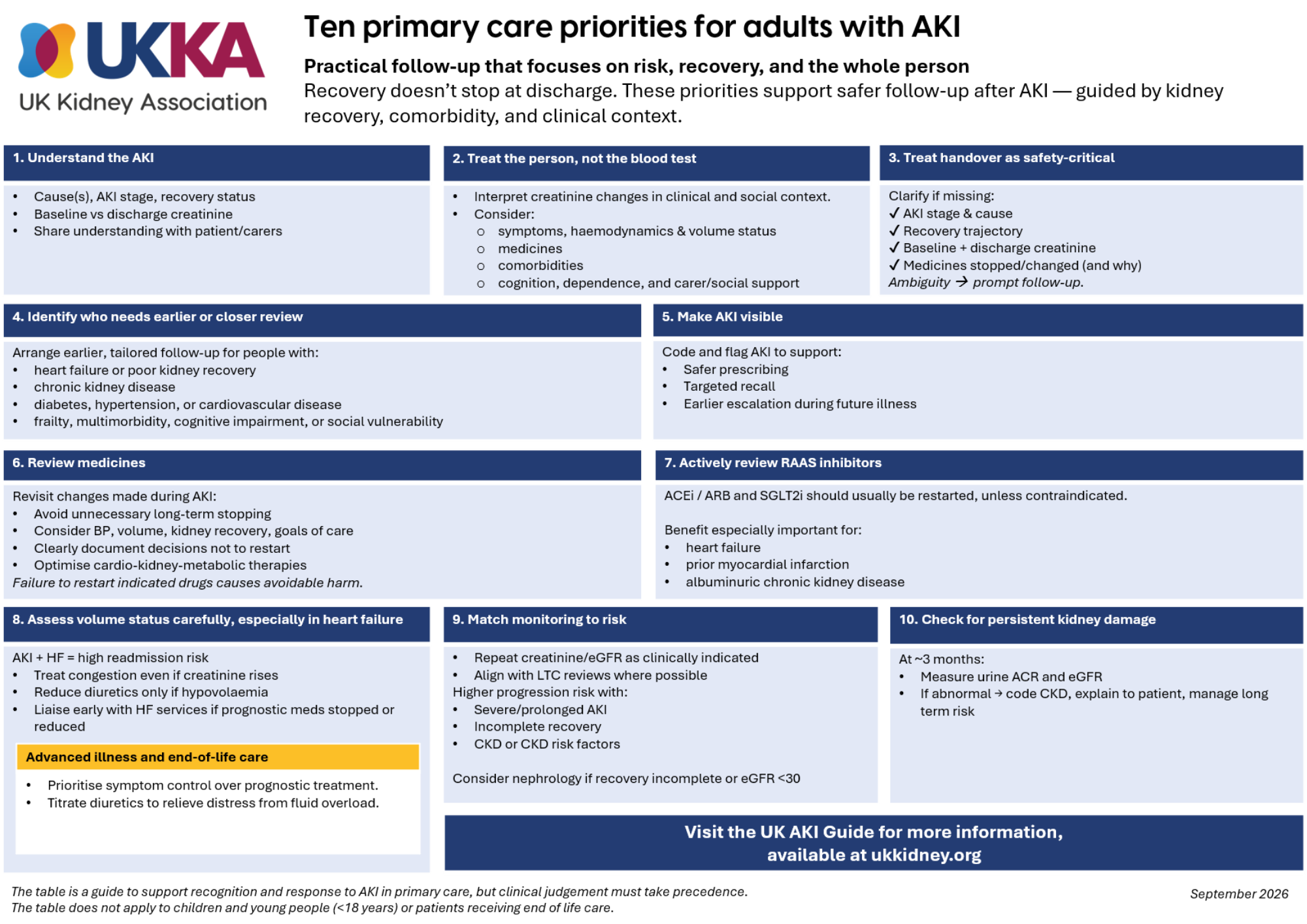
Table 4: Ten primary care priorities for adults with AKI
For broader context on improving post-discharge AKI care at a national level, see the UKKA AKI National Summit Report and Recommendations.