Pharmacological Management of CKD Stages 3-5
The treatment ladder
-
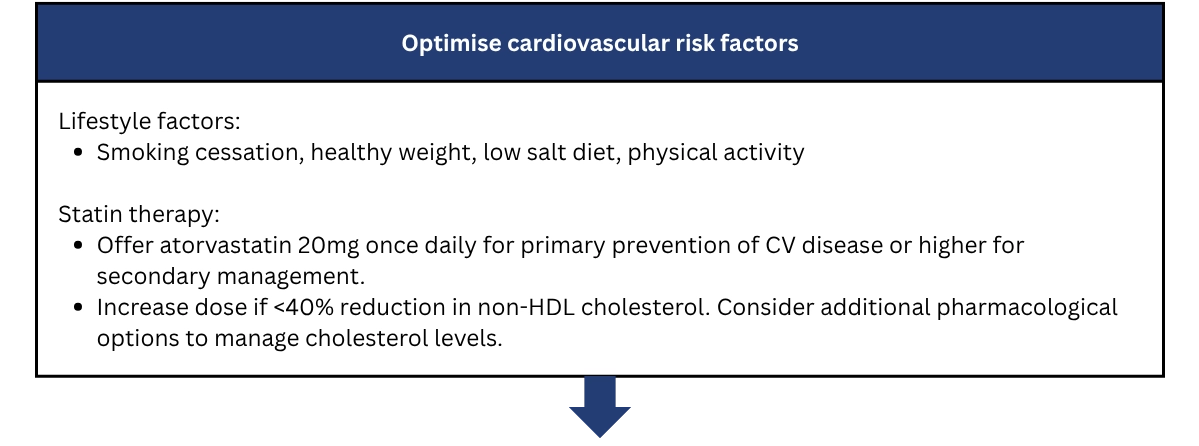
- lipid lowering medications (e.g., statins)
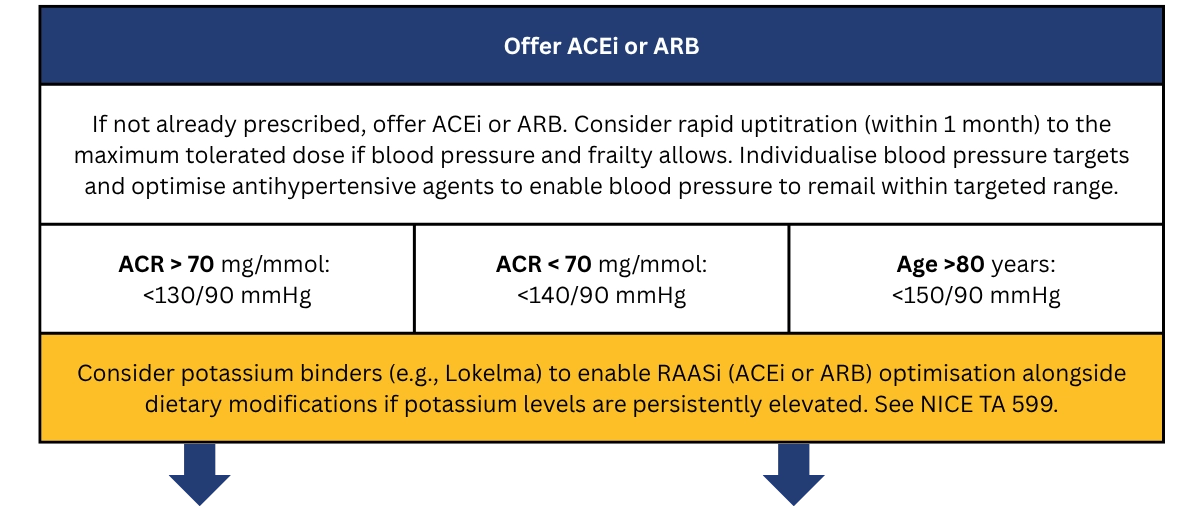
- RASi (ACEi and ARB)
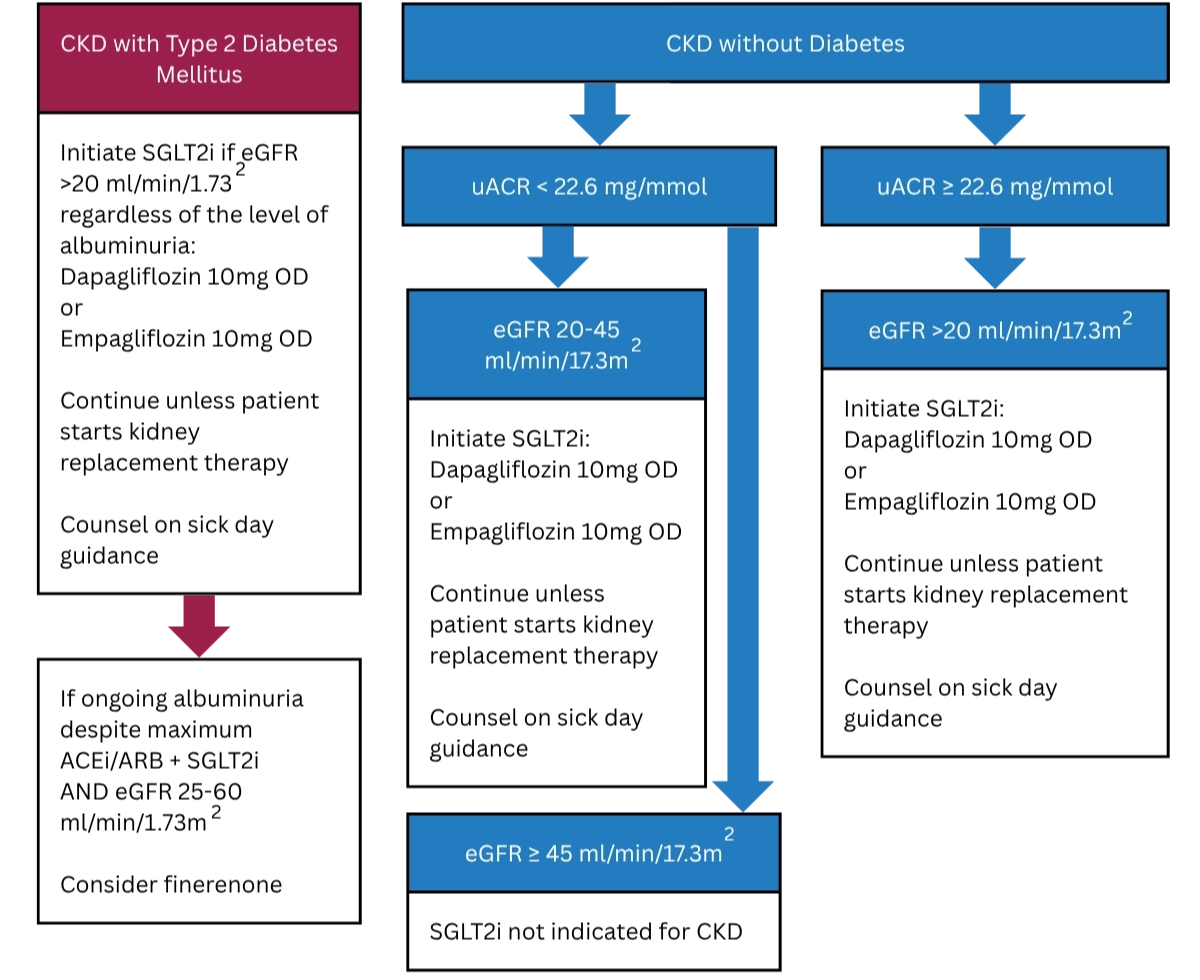
- SGLT2 inhibitors, and
- nsMRA (finerenone)
They work through different but overlapping mechanisms, and the evidence is strongest when they are used together. The earlier CKD is identified and managed, the more effective they are at slowing CKD progression and limiting cardiovascular risk.
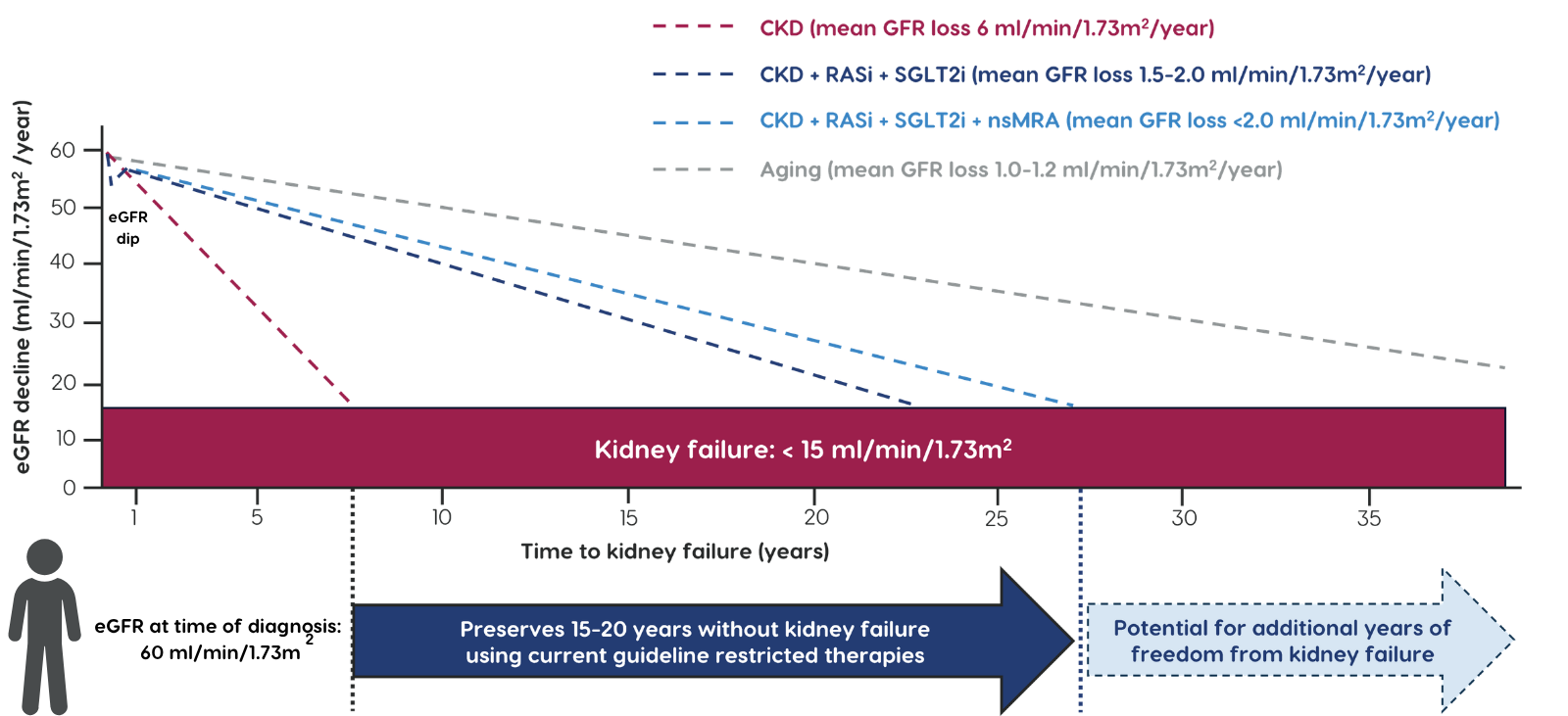
Above figure: Effect of combination drug therapy on eGFR decline
On average, compared with the gradual aging-associated decline in eGFR of 1.0–1.2 mL/min/1.73 m2 per year, a patient with CKD would have precipitous loss of 6 mL/min/1.73m² every year. With current guideline-directed therapies for CKD, the addition of SGLT2 inhibitors and nsMRA to RASi, following an initial eGFR dip, would minimize the rate of eGFR decline to >2.0 mL/min/1.73m² per year. Additional therapies that can provide a clinically significant in annual eGFR loss (>0.75 mL/min/1.73m² /year) in patients with CKD are under evaluation, including GLP1RA, ASI, ERA, sGC activators and anti-inflammatory agents.
Adapted from: Nardone M, Yau K. (2025). Upcoming drug targets for kidney protective effects in chronic kidney disease. Nephrol Dial Transplant. Licensed under CC BY 4.0
Pharmacological management summary
The chart below provides an overview of the management of CKD stages 3a-5, including lifestyle interventions and medication optimisation. Further details on each aspect are provided in the dedicated sections.