

Measurement of kidney function and damage

Patient information
eGFR is an equation that uses your creatinine, age, and gender to see how well your kidneys are working. Creatinine is the level of muscle waste in your bloodstream, which your kidneys are supposed to filter out into urine.
If there is a high level of creatinine in your bloodstream, it could mean that your kidneys are not working well at filtering.
Your healthy creatinine level depends on how much muscle you have in your body and the “good” number may be different for people who have lower or higher muscle mass than average. Because the “good” creatinine number is different in everyone, eGFR is used as a more reliable measure of kidney function in stable patients than creatinine alone.
“Normal” eGFR is approximately 100 but you will often see it reported as >90 (“greater than 90”) or >60 (“greater than 60”). It is for this reason that patients (and some doctors) sometimes quote the eGFR as a percentage of normal kidney function. Whilst not factually correct, it does help to make the numbers easier to understand.
Albuminuria/Proteinuria
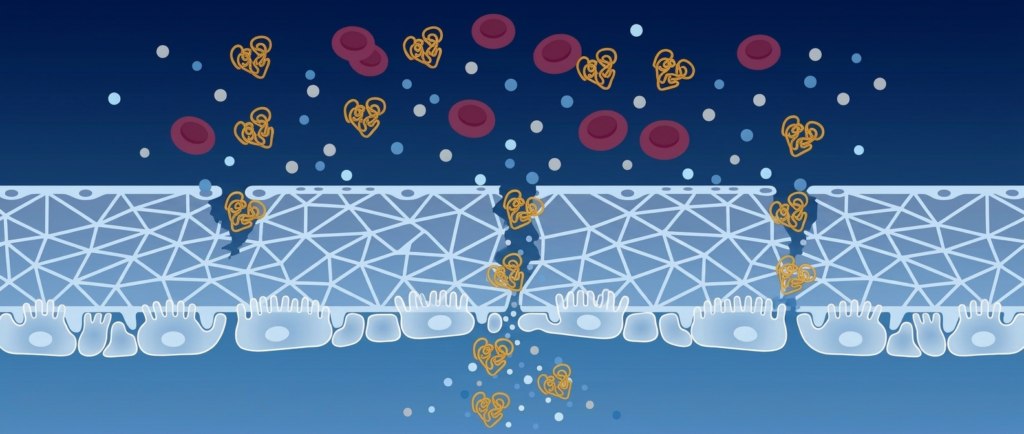
Excessive albumin/protein excretion in the urine is a significant risk factor for both progression of CKD and cardiovascular morbidity and mortality. Unlike haematuria, albuminuria is almost always kidney in origin. In clinical practice albuminuria/proteinuria is usually measured as albuminuria as a test for albuminuria based on a single spot urine sample to provide a urinary albumin-to-creatinine (ACR) level. Where a urinary protein-to-creatinine ratio (PCR) is done an estimate of ACR can be provided by multiplying PCR by 0.7.
Measurement of albuminuria forms an essential part of renal function assessment:
- Urinary albumin leak may be the very first sign of kidney disease for many patients, such as those with diabetic kidney disease and may appear many years before eGFR starts to decline.
- In patients known to have CKD, quantification of albuminuria allows risk-stratification and identification of those patients who are at highest risk of progression to kidney failure (see 4 variable kidney failure risk ).
- Albuminuria is an important independent risk factor for cardiovascular morbidity and mortality.
- Measurement of ACR forms the basis of the NICE grading system for CKD.
- The level of albuminuria will help determine optimum patient management e.g. frequency of monitoring, blood pressure target, eligibility for disease modifying therapies such as renin-angiotensin-aldosterone-system(RAAS) inhibitors and sodium-glucose co-transporter-2 (SGLT2) inhibitors, alongside timing of referral to see a specialist service (see management of CKD).
- Excessive albuminuria or the combination of haematuria and albuminuria may suggest an underlying glomerular disorder, especially in patients with other signs of auto-immune or multi-system disease. it is important that these patients are referred urgently for specialist assessment (see referral to specialist). Generally, a patient who does not have diabetes and has an ACR of 70 mg/mmol or more or haematuria (diagnosed on and confirmed by urinary diptest) and an ACR of 30 mg/mmol or more should be evaluated by a nephrologist for evidence of kidney disease.
- In patients with albuminuria the risk of kidney failure is greater in younger patients and the risk of cardiovascular disease is greater in older patients. These risks may be altered by therapy.
There is an urgent need to improve rates of urine ACR testing for patients at risk of or living with kidney disease across the UK.
How to measure albuminuria/proteinuria:
- Reagent strips are no longer recommended as screening tools for albuminuria/proteinuria. A quantitative test should be used instead.
- Urine ACR is the recommended first-line test to assess for proteinuria. It has better sensitivity at an ACR< 70mg/mmol compared to urine PCR.
- A urine ACR result between 3-70 mg/mmol should be rechecked on an early morning sample to confirm the result. Some patients may have benign orthostatic proteinuria, which can be excluded by an early morning test.
- ACR results >70 mg/mmol do not need a confirmatory repeat.
- For quantification and monitoring of higher levels of proteinuria (e.g. ACR > 70 mg/mmol) PCR is acceptable, to convert to ACR multiply by 0.7.
- A PCR of 100 mg/mmol, or ACR of 70 mg/mmol, is equal to approximately 1g of protein per 24 hr; below this level the conversion is non-linear.
Who should be tested for albuminuria/proteinuria:
- All patients with confirmed or suspected kidney disease require evaluation with a urine ACR test.
- Patients at risk of developing kidney disease require regular testing with both eGFR AND urine ACR. This includes people with:
- Diabetes
- Hypertension
- Previous episode of acute kidney injury
- Cardiovascular disease (ischaemic heart disease, chronic heart failure, peripheral vascular disease or cerebral vascular disease)
- Structural renal tract disease, recurrent renal calculi or prostatic hypertrophy
- Multisystem diseases with potential kidney involvement, for example, systemic lupus erythematosus
- Gout
- Family history of end-stage renal disease (GFR category G5) or hereditary kidney disease
- Incidental detection of haematuria or proteinuria.
NICE Guideline recommendations
Management of patients with proteinuria:
A number of urine ACR based treatment thresholds have been recommended by NICE.
Abnormal and adequate to define CKD G1 or G2. Commence ACEI/ARB if patient has diabetes. For patients with T2DM, initiate SGLT2i if eGFR ≥20–25 ml/min/1.73m².
Commence SGLT2 inhibitor in patients with non-diabetic CKD and an eGFR ≥20–25 ml/min/1.73m².
Favour RAAS inhibitors if hypertensive
Threshold to consider RAAS inhibitor prescription and a lowered BP target of 130/80
Consider referral for specialist nephrology advice unless proteinuria known to be caused by diabetes and treatment has already been optimised.
Referred to as “nephrotic range” proteinuria. In the presence of oedema and hypoalbuminaemia, sufficient to define the “nephrotic syndrome”. These patients must be referred to a specialist
Information for patients
In health only small quantities of protein are present in the urine. If higher levels of protein are present this is termed ‘proteinuria’. Proteinuria can be a marker of kidney damage and patients with higher levels of protein in their urine are at increased risk of developing heart disease and progressive kidney damage. It is important to identify these individuals as they may benefit from different interventions to reduce their risk of developing heart disease or worsening kidney disease.
Haematuria
Visible (also known as macroscopic or frank) haematuria
Management:
- Usually, fast track Urology referral for imaging and cystoscopy unless strong pointers to acute renal disease.
Non-visible (also known as microscopic) haematuria
Detection:
- Use reagent strips rather than urine microscopy for detection. (There is no need to perform microscopy to confirm a positive result.)
- Evaluate further if there is a result of 1+ or more.
- Non-visible haematuria should be confirmed on at least 2 out of 3 consecutive urine tests (taken on separate occasions).
- Measure renal function and assess for proteinuria in all cases.
Management:
Age >60:
- Usually refer to urology (see local guidance for referral pathways). If renal impairment and/or proteinuria also present, consider simultaneous referral to nephrology.
Age 60 or >60 with negative urological investigations
- If no proteinuria AND eGFR > 60 ml/min/1.73m² manage as CKD stage G1/G2 otherwise refer to nephrology.
For further information please review the NICE guidelines.
Information for patients
Haematuria means blood in the urine. Sometimes this is visible to the naked eye or it may only detected by a urine dipstick test or when urine is examined using a microscope. Lots of different conditions can result in blood urine in the urine. The most likely cause varies depending on your age, if you are leaking protein (as well as blood) in the urine, and whether your kidney function is impaired. Further investigations may be required to find the cause.