

Renin-Angiotensin System (RAS) Inhibitors
RAS inhibitors include ACE inhibitors or Angiotensin receptor blockers (ARBs).
ACEi/ARBs are indicated for CKD when:
| Co-morbidities present | uACR value | ACEi/ARB indicated? |
|---|---|---|
| Diabetes Mellitus | > 3mg/mmol | Yes |
| Diabetes Mellitus & Hypertension | > 3mg/mmol | Yes |
| Hypertension | > 30mg/mmol | Yes |
| No HTN or T2DM | > 70mg/mmol | Yes |
Pre-initiation Checklist:
There are very few absolute contraindications to RAS inhibitors, however the following groups may need lower starting doses and more frequent monitoring:
- Potassium should be <5mmol/L
- Check past records and start with caution in patient with:
- Previous deterioration in renal function with these agents
- Known renovascular disease
- High risk of AKI (high output stoma, poor oral intake of fluid)
- Counsel patients on sick day rules

Do NOT offer dual prescription of ACE inhibitors and ARBs. Please see MHRA guidance on this topic.
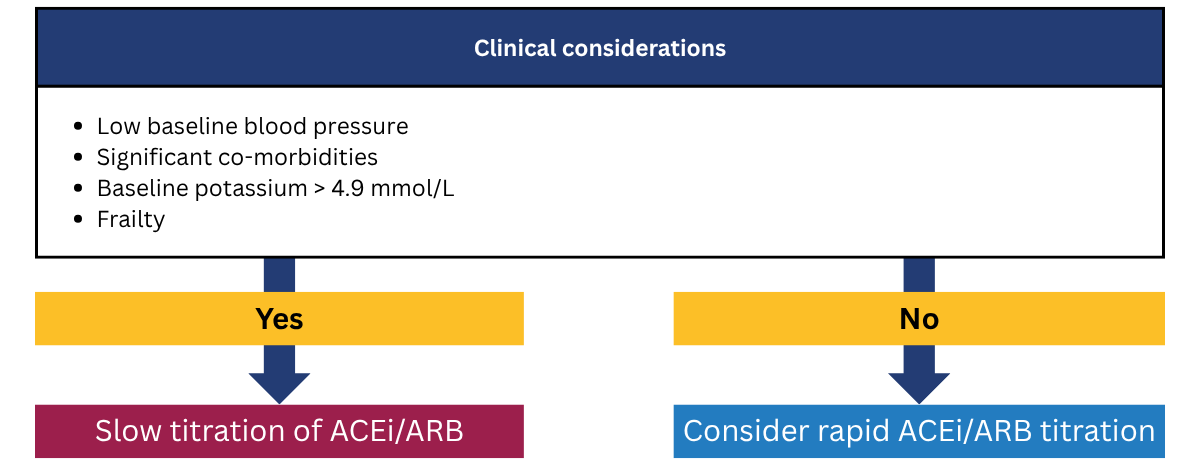
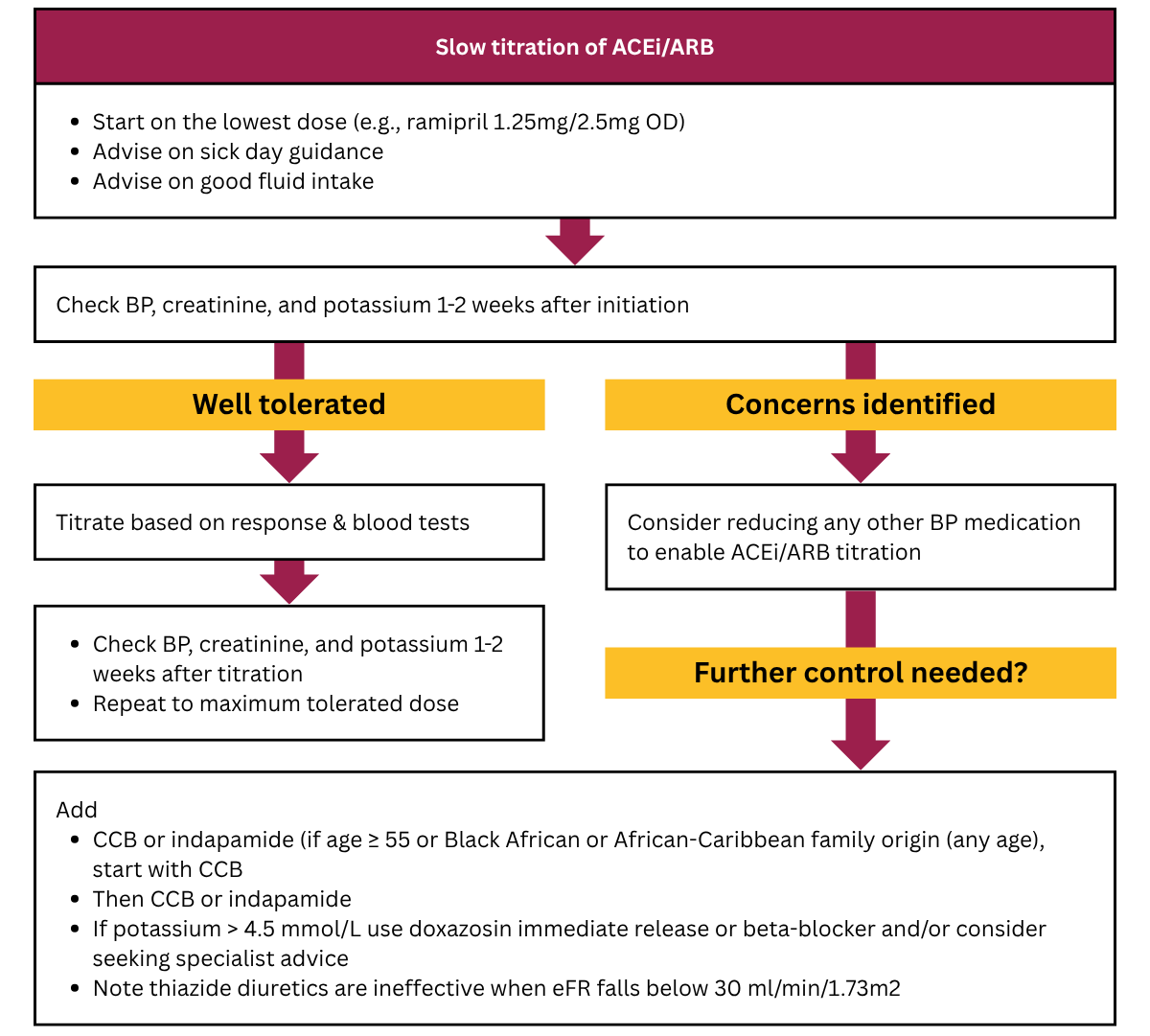
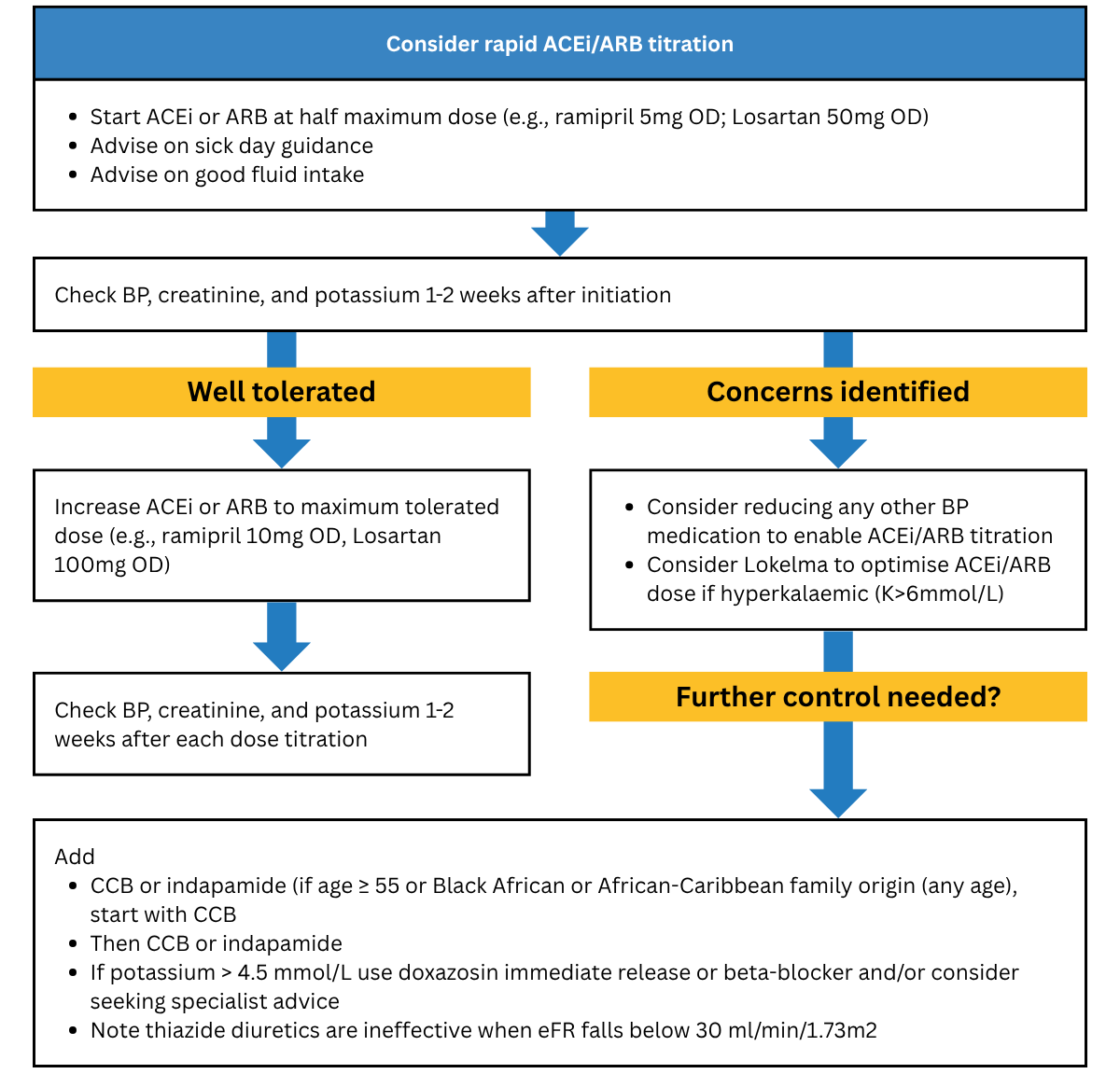
Initiating ACEi or ARB
Interpretation of changes to blood tests after initiation
eGFR

If creatinine rise is <30% or GFR fall is < 25%
If creatinine rise is <30% or GFR fall is < 25%, this is acceptable. Continue ACEi/ARB. Do not routinely stop or modify the RAS inhibitor if lesser changes in renal function are observed, provided creatinine and potassium are stable.

If creatinine rises >30% or eGFR falls >25%
If creatinine rises >30% or eGFR falls >25% on repeat testing, stop the drug and consider other causes e.g. volume depletion, NSAID use. If there is no other explanation for the deterioration in renal function, consider investigations for renal artery stenosis.
Potassium
Do NOT reflexively stop RAASi for hyperkalaemia. Discontinuing RAASi is associated with worse kidney and cardiovascular outcomes and has been linked to significantly higher mortality risk. Manage the hyperkalaemia first where possible (see Hyperkalaemia section). Only stop of dose reduce ACEi/ARB if persistent of unsafe hyperkalaemia despite correction of reversible causes and appropriate potassium-lowering strategies.
Modest stable hyperkalaemia (5.5-5.9 mmol/l)
Modest stable hyperkalaemia (5.5-5.9 mmol/l) is usually preferable to discontinuing a valuable therapy. This situation is most frequently encountered in patients with diabetes or heart failure in whom the evidence base for RAS blockade is very strong. See the Hyperkalaemia section for strategies to facilitate continuation of ACE inhibitors or ARBs in this patient group.
If K is 6-6.4 mmol/l
If K is 6-6.4 mmol/l on a RAS inhibitor consider repeating the result to ensure it isn’t spurious, stop any other drugs that may be contributing (e.g. NSAIDs, potassium-sparing diuretics, trimethoprim) and enquire about dietary potassium (especially ‘low salt alternatives’ which often contain potassium chloride).
Persistent hyperkalaemia
Consider referral to nephrology team if persisent hyperkalaemia is limiting optimisation of RAASi therapy (including ACEi/ARB/ nsMRA). Nephrology services can often support continuation or up-titration of RAASi through specialist management of hyperkalaemia, including the use of potassium binders (e.g. patiromer or sodium zirconium cyclosilicate), if red or amber listed in local formulary.