
Diabetes management
- Discuss and agree an individual HbA1c target with adults with type 1 & 2 diabetes.
- A less stringent target may be appropriate for older or frail individuals, those with limited life expectancy, people at increased risk from hypoglycaemia (such as those prone to falls, with impaired hypoglycaemia awareness, or whose occupation involves driving or operating machinery), or where intensive treatment would be unsuitable because of significant comorbidity.
- Encourage them to reach their target and maintain it, unless any resulting adverse effects (including hypoglycaemia), or their efforts to achieve their target impair their quality of life.
- If a person achieves an HbA1c below their agreed target without experiencing hypoglycaemia, they should be encouraged to maintain this level. However, clinicians should remain alert to other potential causes of unexpectedly low HbA1c values, such as worsening renal function or unintentional weight loss.
- For adults with type 2 diabetes whose HbA1c rises to 58 mmol/mol or above despite initial treatment, clinicians should:
- Reinforce advice on healthy lifestyle, diet, and medication adherence.
- Support the individual to achieve an HbA1c target of 53 mmol/mol.
- Escalate glucose-lowering therapy as appropriate.
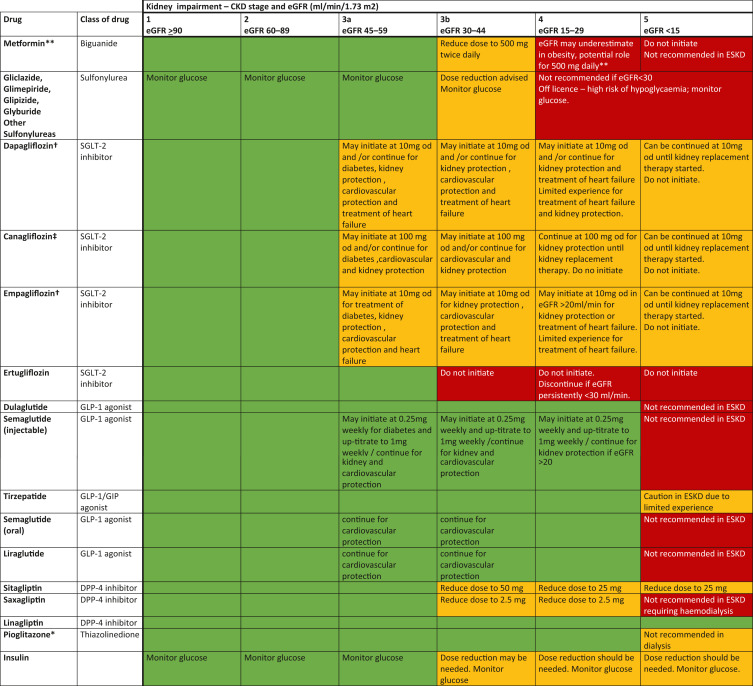
Source: Karalliedde J, et al. Kidney Int Rep. 2025;10(10):3318–31. CC BY 4.0.